Marketing is changing faster than many businesses can comfortably keep up with. A strategy that worked well a couple of years ago may still bring results, but the way people discover brands, consume content and decide what to buy is becoming quite different.
The rise of AI is only one part of this shift. Search behaviour is changing, social platforms are becoming discovery engines, customers expect more relevant experiences, and brands are being pushed to prove that their content actually comes from experience rather than just repeating information already available online.
That is why keeping an eye on the latest Digital Marketing Trends matters in 2026. The idea isn’t to jump onto every new platform or tool, but to understand where customer behaviour is moving and adjust your strategy before you are forced to.
What Are Digital Marketing Trends?
Digital marketing trends are changes in the way brands use digital channels, technology, data and content to reach and engage customers. They can come from new technology, changing consumer habits, search behaviour, social media platforms or even changes in how businesses measure marketing performance.
Some trends stay around for years, while others disappear almost as quickly as they arrive. The digital marketing new trends worth watching are the ones that change how customers actually discover, evaluate or interact with a business.
For marketers, this means trend-spotting isn’t about chasing whatever is popular. It is more about understanding which changes can genuinely improve customer experience and business results.
Top 10 Digital Marketing Trends
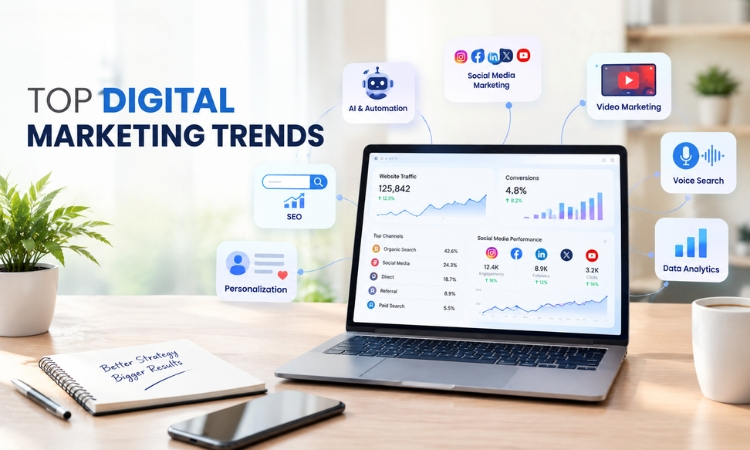
The biggest shifts in 2026 are happening across several parts of marketing at the same time. AI, search, video, data and personalisation are all connected, and businesses that understand this bigger picture can make better decisions instead of treating every trend as a separate task.
1. AI Is Becoming Part Of Everyday Marketing, Not Just Content Creation
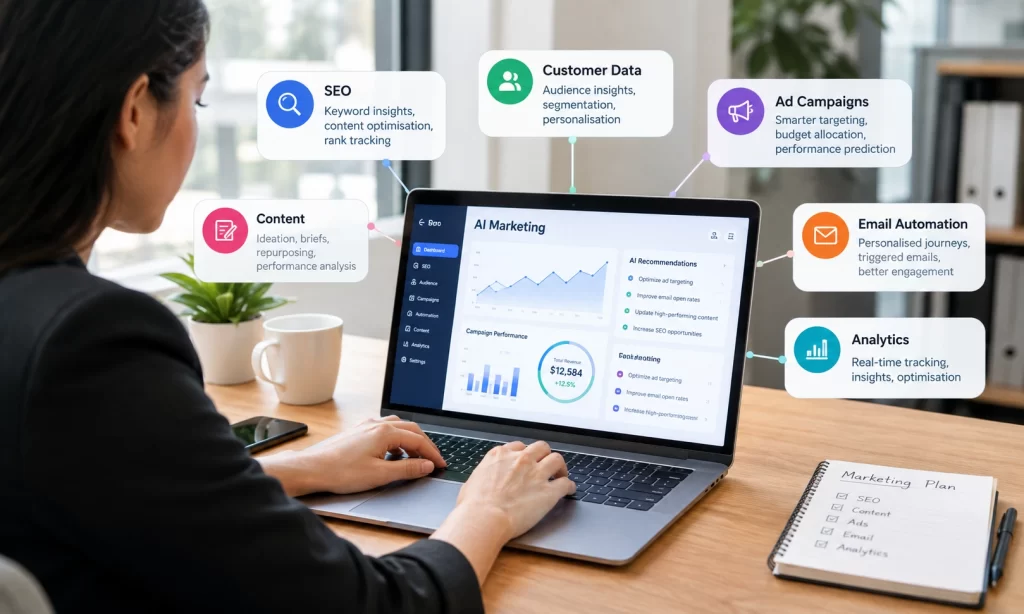
AI has already become common in content creation, but that is only the more visible part of the story. Marketers are increasingly using AI to support research, planning, customer understanding and campaign decisions too.
Instead of asking AI to simply write a social media caption, a marketer can use it to organise customer feedback, identify patterns in campaign data, suggest audience segments or help plan a content calendar. This makes AI more of a working assistant than just a content-writing machine.
AI For Customer Research
Customer research can involve a lot of information, from reviews and surveys to support conversations and website behaviour. AI can help marketers organise these large amounts of information and identify recurring themes.
It still needs human judgement, though. A pattern found by an AI tool is not automatically a useful customer insight, so marketers need to check the context before acting on it.
AI For Personalisation And Campaign Optimisation
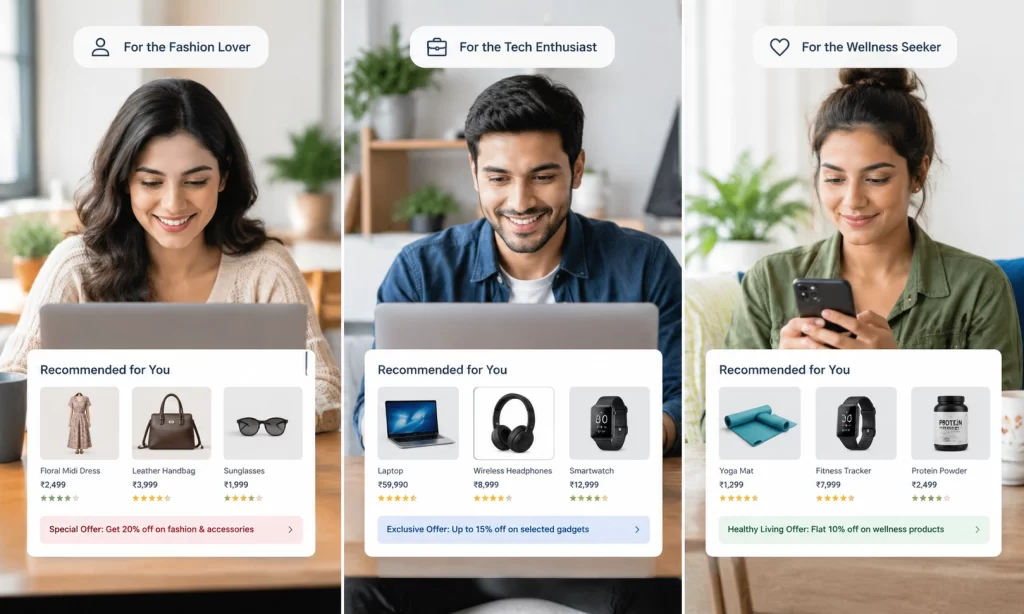
AI can also help brands deliver more relevant messages to different audiences. An ecommerce business, for example, may use customer behaviour to recommend products or adjust the content shown to different visitors.
Campaign optimisation is another area where AI can save time. It can identify which audiences, creatives or messages are performing better, allowing marketers to make adjustments without waiting for every decision to be made manually.
Why Human Strategy Still Matters
AI can process information quickly, but it doesn’t replace brand understanding. Human strategy, fact-checking, creativity and knowledge of the audience are still needed.
A poorly checked AI-generated claim can damage trust very quickly. The strongest approach in 2026 will probably be human-led marketing with AI supporting the repetitive and data-heavy work.
2. Search Is Expanding Beyond Traditional Google Results
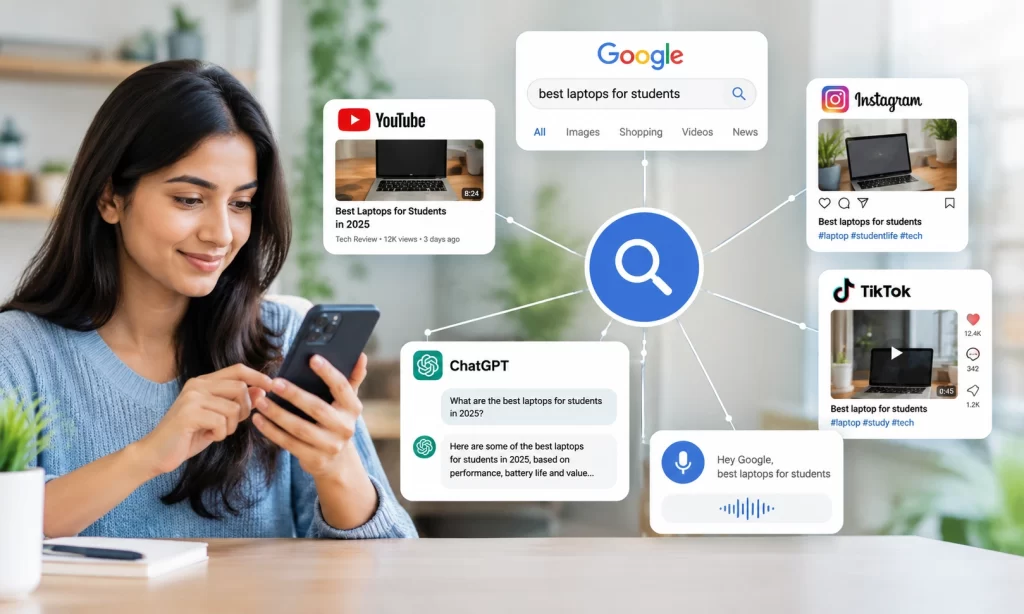
People are no longer relying only on traditional search results when they need information. AI platforms and conversational search are increasingly becoming part of the discovery process, especially for questions that require a detailed or personalised answer.
This creates a slightly different challenge for marketers. Traditional SEO focuses heavily on helping pages appear in search results, while visibility across AI-generated answers also depends on whether information is clear, reliable and easy for systems to understand.
Content should therefore be organised in a way that answers questions directly. Clear headings, useful explanations, trustworthy information and strong topical relevance can all help content become easier to interpret.
This doesn’t mean traditional SEO is suddenly irrelevant. Instead, marketers need to think about search visibility more broadly and keep applying solid best SEO practices while adapting to new search experiences.
3. First-Hand Experience And Original Content Will Matter More
The internet already has millions of articles explaining the same basic topics. Simply rewriting information that is already available is becoming less valuable, particularly when readers can find several almost identical answers within seconds.
Originality doesn’t always mean conducting a massive research study. Learning how to write SEO content around real customer stories, expert interviews, internal experiments, or proprietary data makes a huge difference.
Case studies are particularly useful because they show what happened in a real situation. Expert opinions can add another layer of credibility, while customer insights help content move away from generic advice.
This is where Content Marketing can become much more useful. Instead of publishing just to fill a content calendar, brands can create material that contains something readers cannot easily get from ten other websites.
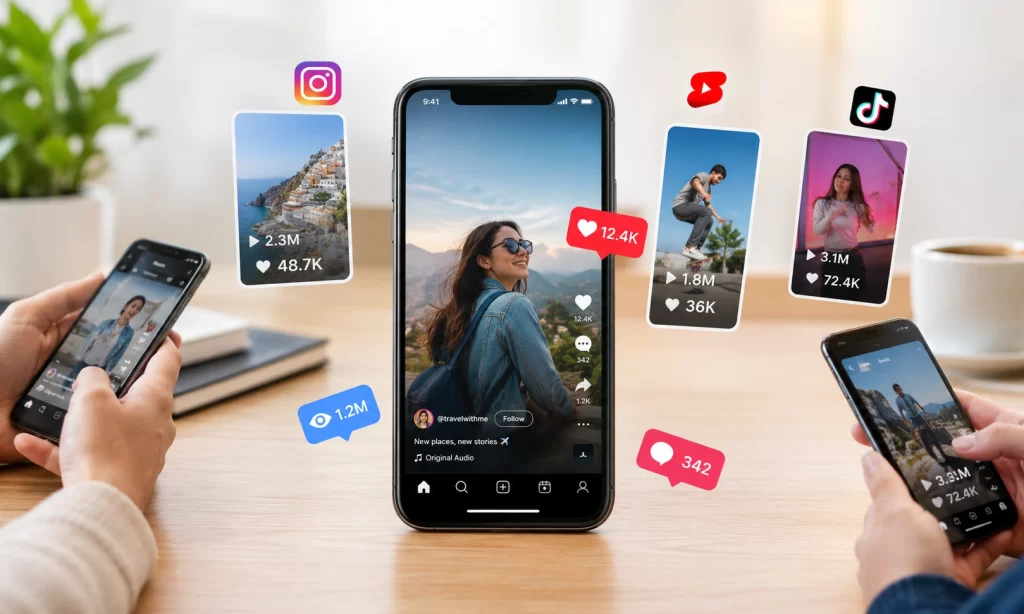
Short-form video isn’t disappearing simply because audiences have become used to it. If anything, the format has become a standard way for people to discover products, learn something quickly and decide whether a brand interests them.
Instagram Reels, YouTube Shorts and similar formats allow businesses to communicate an idea without asking viewers for a long attention span. A product demonstration, quick tutorial, customer reaction or behind-the-scenes clip can sometimes explain more than a long product description.
The important part is not just making more videos. The opening seconds, visual clarity and usefulness still matter. Videos that feel repetitive or overly promotional can struggle even when the production quality is high.
For brands, incorporating these formats is key to unlocking the true benefits of digital marketing, ensuring video content is treated as an integrated component of wider outreach rather than a isolated task.
5. Personalisation Will Move From “Nice To Have” To Customer Expectation
Customers have become accustomed to seeing recommendations and messages based on what they have previously searched, viewed or purchased. Because of this, generic communication can sometimes feel less useful.
Personalisation can be quite simple. An email can recommend products based on a previous purchase, while a website can show content that is more relevant to a visitor’s interests.
But there is a balance to maintain. Too much personalisation can feel intrusive, especially when customers don’t understand how a brand knows certain things about them.
The better approach is to use customer data to make experiences more useful, not to make people feel like they are being watched. Partnering with a reliable SEO agency in India can help brands navigate these changing technical requirements seamlessly.
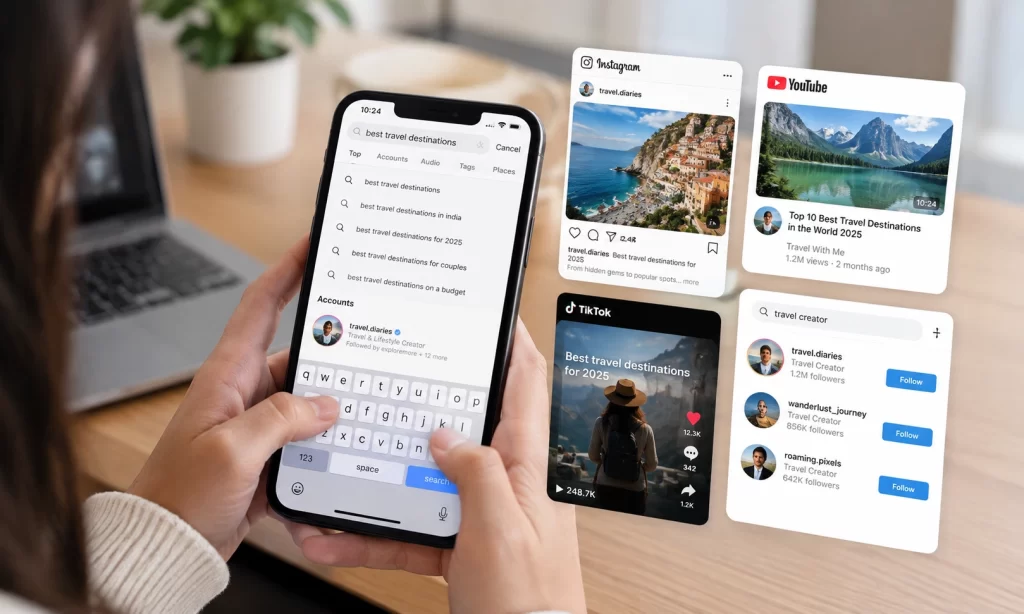
Social platforms are increasingly being used to find information, products, recommendations and even businesses. Someone looking for a restaurant, skincare product or fashion idea may now search directly within a social platform instead of starting with Google.
That makes social content discoverability more important. Captions, video titles, descriptions and on-screen text can all help explain what a piece of content is about.
Businesses should also use language their audience actually searches for. A vague caption might look attractive, but a clear description can make content easier to discover.
This is one reason social media marketing is closely connected with search visibility today. Social platforms are no longer just for building followers; they are becoming essential discovery engines.
7. First-Party Data Will Become More Valuable
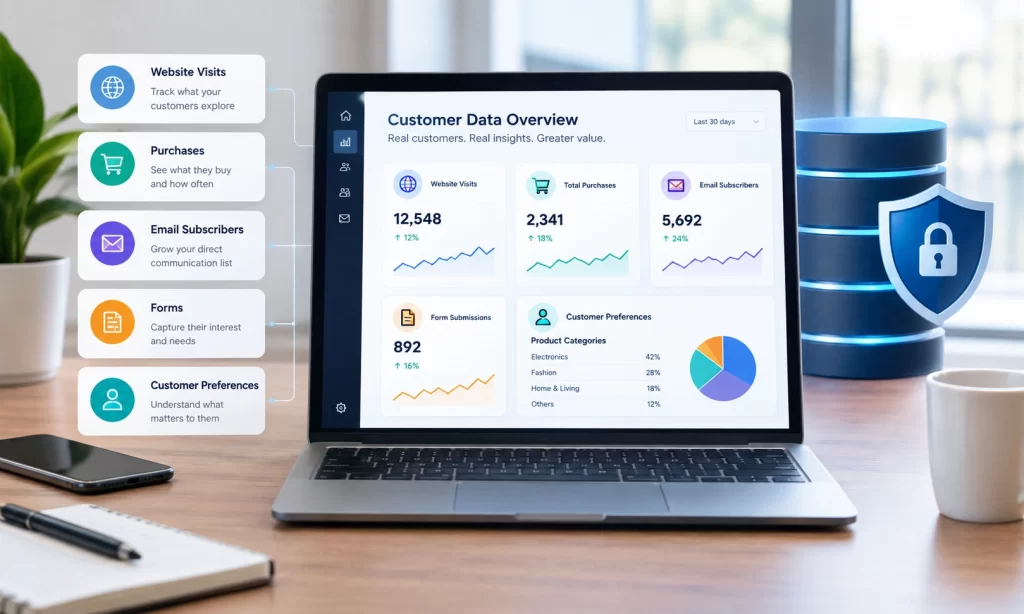
As businesses become more careful about privacy and third-party tracking becomes less dependable, information collected directly from customers becomes increasingly useful.
First-party data can come from website interactions, purchases, email subscriptions, customer feedback and other direct interactions. Because the information comes from the relationship between the customer and the brand, it can also be more relevant than broad third-party audience data.
However, collecting data isn’t enough. Businesses need to understand why they are collecting it and how it can improve the customer experience.
A good data strategy should also be transparent. Customers are more likely to trust brands that clearly explain what information is being collected and why.
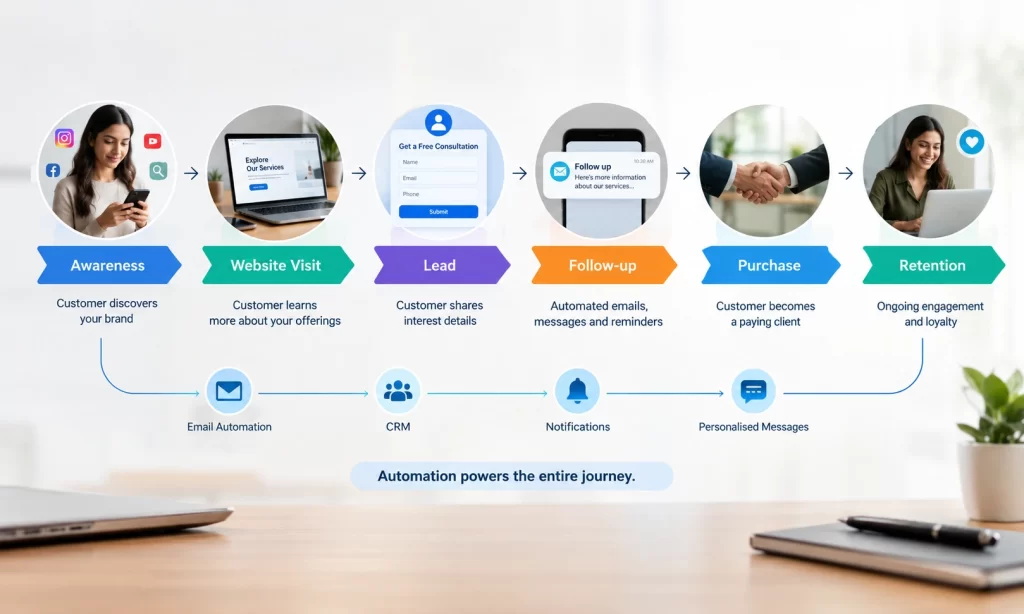
8. Marketing Automation Will Focus More On The Customer Journey
Marketing automation is moving beyond simply sending scheduled emails. The focus is increasingly shifting towards what happens throughout the complete customer journey.
A customer may first discover a brand through social media, visit its website, download something, receive an email, make a purchase and later need support. Automation can connect these different stages so the experience feels more consistent.
Lead Nurturing
Not every person who visits a website is ready to buy immediately. Automated follow-ups can provide useful information over time, helping potential customers understand the product before they make a decision.
This is especially useful for businesses with longer sales cycles, where pushing for an immediate purchase may not work.
Customer Onboarding And Retention
Automation can also continue after the sale. Welcome emails, product guidance, reminders and useful updates can make onboarding smoother.
Retention deserves the same attention. Instead of using automation only to chase new leads, businesses can use it to stay connected with existing customers and encourage repeat engagement.
Remarketing And Follow-Ups
Remarketing can remind customers about products or services they previously considered, while automated follow-ups can keep conversations moving without requiring every message to be sent manually.
The key is relevance. Automation should make communication more timely, not turn the customer inbox into a stream of repetitive messages.
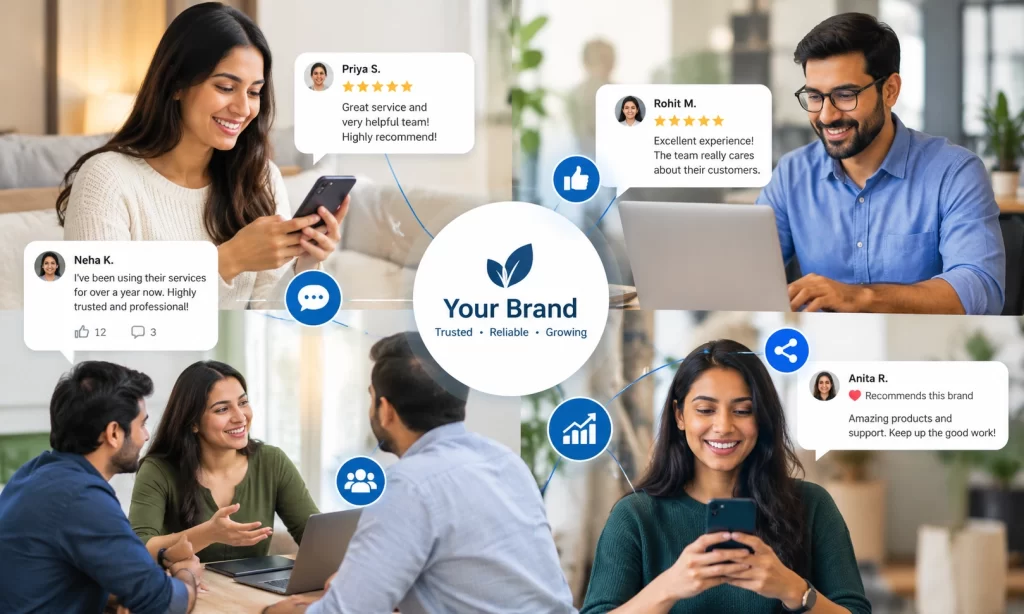
9. Community And Brand Trust Will Become Stronger Growth Drivers
People can easily find hundreds of brands offering similar products and services. What becomes harder to copy is a trusted relationship with customers.
Communities can help create that relationship. This could be a social media community, a private group, an email audience or simply a group of customers who regularly interact with a brand.
Trust also comes from consistency. Brands that show real people, answer questions honestly, share useful information and acknowledge mistakes can feel more credible than businesses that only publish polished promotional content.
This is one of the important digital marketing future trends because attention alone doesn’t guarantee loyalty. Customers still need a reason to choose one brand over another.
10. Conversion Optimisation Will Matter More Than Just Getting Traffic
Getting visitors to a website is useful, but traffic by itself doesn’t pay the bills. Businesses will need to focus more on what happens after someone reaches the website.
A page can rank well and still perform poorly if visitors cannot quickly understand the offer or find the next step. This makes conversion optimisation an important part of current digital marketing trends.
Page Speed And Mobile Usability
People don’t usually want to wait around for a slow page to load. They may simply leave and move to another website.
Mobile usability matters just as much because a large part of online browsing happens on phones. Buttons, forms, menus and product information should be easy to use on smaller screens.
Clear Messaging And Strong CTAs
Visitors should understand what a business offers without having to search through several sections. Clear messaging makes that easier.
Calls to action should also tell users what happens next. A simple action such as “Book A Consultation” or “Get A Quote” is usually clearer than vague wording.
Trust Signals And Relevant Landing Pages
Reviews, testimonials, secure payment information, clear policies and other trust signals can reduce hesitation. Landing pages should also match the message that brought the visitor there in the first place.
If someone clicks an advertisement for a particular service and lands on a generic homepage, the journey becomes unnecessarily difficult. Good conversion optimisation removes these small points of friction.
How To Prepare Your Digital Marketing Strategy For 2026
You don’t need to adopt every new tool or platform at once. That usually creates more work without creating much more value.
Start by looking at what is already working. Check where your customers are coming from, which content receives meaningful engagement, where people leave your website and which campaigns actually contribute to sales.
From there, choose two or three areas that have the clearest connection with your business goals. A small business may benefit more from improving its website and using AI for customer research than from trying five new social platforms at once.
Your Digital Marketing Strategies should also leave some room for testing. What works for an ecommerce brand may not work for a B2B company, and even businesses in the same industry can have very different audiences.
Technical SEO, content quality, and website experience should work together seamlessly rather than being treated as isolated marketing tasks.
Which Digital Marketing Trends Should Your Business Prioritise?
Not every business needs to follow every trend at the same time. If you work with a digital marketing agency in india, your priorities should be tailored to what you actually want to improve, whether that’s visibility, leads, customer retention, or reducing manual workload.
Here’s a simpler way to match your business goal with the trend that makes the most sense for it.
- Increase Organic Visibility
If getting found online is your main goal, focus on SEO + AI search visibility. Traditional search still matters, but businesses also need to think about how their content appears in newer AI-powered search experiences.
Executing top SEO strategies with clear content, strong topical relevance, and a technically sound website can help you build long-term organic authority across changing search environments.
- Generate More Leads
For businesses that want more enquiries or potential customers, CRO + automation should be a priority. Getting people to your website is only the first part. Your pages also need to make it easy for visitors to understand the offer and take the next step.
Automation can then help with follow-ups and lead nurturing, so potential customers don’t simply disappear after their first interaction.
- Build Brand Awareness
If your biggest goal is getting more people to notice and remember your brand, look at short-form video + social. Short videos can communicate an idea quickly, while social platforms give brands more opportunities to reach new audiences.
You don’t necessarily need highly produced videos every time. Useful, easy-to-understand and consistent content can be enough to keep your brand visible.
- Improve Customer Retention
Businesses focused on keeping existing customers should give more attention to personalisation + CRM. Customers are more likely to stay engaged when communication feels relevant to their needs instead of being the same message sent to everyone.
A good CRM system can also help businesses understand customer interactions and create more timely follow-ups.
- Reduce Marketing Workload
If your marketing team is spending too much time on repetitive work, AI + automation can make a real difference. AI can support research, planning and data analysis, while automation can handle repetitive communication and follow-up tasks.
The idea isn’t to remove people from the process. It’s to give them more time for strategy, creative thinking and decisions that actually need human judgement.
- Build Long-Term Trust
For brands that want to establish stronger relationships with their audience, focus on original content + community. People have plenty of access to generic information, so content based on real experience, useful insights and genuine customer needs can stand out better.
Community also gives customers a place to interact with the brand and with each other. Over time, this can help create familiarity and trust rather than just short-term attention.
- Improve Targeting
If your main concern is reaching the right audience, first-party data should become a bigger part of your strategy. Information collected directly through customer interactions can help businesses understand their audiences and make their marketing more relevant.
Conclusion
The digital marketing world in 2026 is less about one big breakthrough and more about several changes happening together. AI is becoming part of everyday marketing work, search is expanding, customers expect more relevant experiences and original content is becoming more important.
At the same time, traffic alone is not enough. Brands need to understand what happens after discovery, how customers move through the buying journey and what makes them trust a business in the first place.
The strongest approach is likely to be a balanced one. Use technology where it saves time, use data where it improves decisions, and keep human experience and judgement at the centre of the strategy. That way, following Digital Marketing Trends becomes less about chasing what’s new and more about building marketing that actually works.